Six Basic Survival Skills
There is so much information on basic survival skills that you might be asking "Where to start?" Here are 6 primary components of wilderness survival to help you thrive in any situation.
-
Attitude

More than any other skill, your attitude determines how successful you are in a survival situation. This first of the basic survival skills might even determine whether you live or die!
To start, consider "The Rule of Threes." A human can survive for:- 3 minutes without air
- 3 hours without regulated body temperature (shelter)
- 3 days without water
- 3 weeks without food
The "Rule of Threes" provides a guideline of how to prioritize basic survival skills: first shelter, then water, and lastly food.
Surviving a difficult wilderness situation also requires meeting many challenges while avoiding panic. When faced with a potential survival situation, remember to use a "SPEAR":
Stop
Plan
Execute
Assess
Re-evaluate
By systematically assessing, planning, and executing your basic survival skills, you will help keep your mind and body actively engaged in addressing your situation. This will greatly aid in avoiding panic and other negative states of mind. By upholding an upright attitude, your chances of survival are greatly improved! -
Shelter
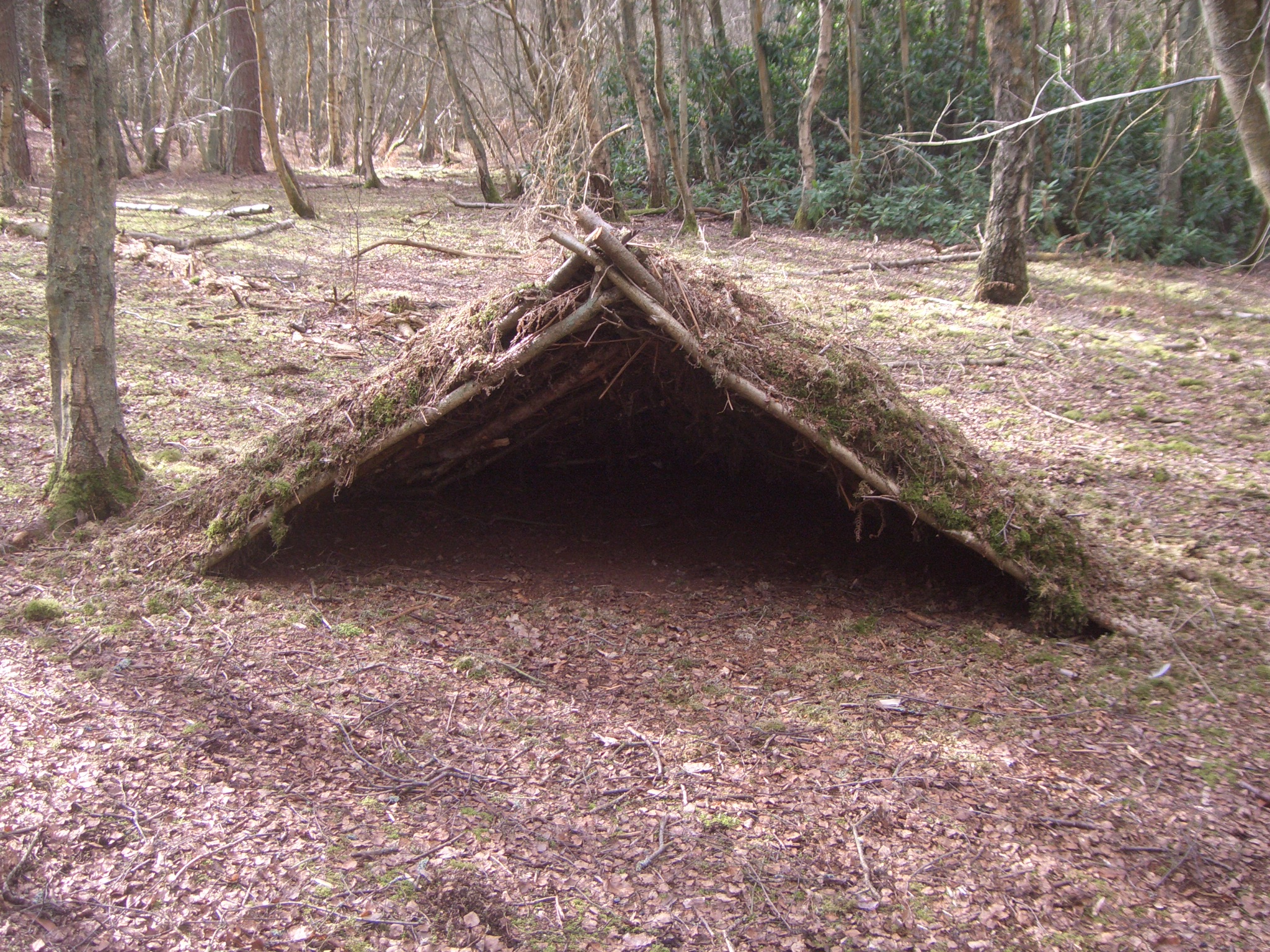
Many people who are forced into survival situations often get into serious trouble because of direct exposure to the elements. Most people in survival situations die of hypothermia, which can be easily avoided with basic survival skills. Being able to build a shelter is of paramount importance in a survival situation. It is extremely important to prevent or minimize heat loss, or if in a desert environment, to minimize water loss. Here are some things to think about when planning to build a shelter:
Shelter Considerations:- Location (away from hazards, near materials)
- Insulation (from ground, rain, wind, air)
- Heat Source (body heat or fire-heated)
- Personal or Group Shelter
There are many types of shelters to consider including natural shelters such as caves, hollow stumps and logs, as well as building shelters such as a debris hut, lean-to, debris tipi, scout pit or snow shelter. Of the shelters listed, the debris hut is often the most practical to construct in almost any environment. You can also learn how to construct a debris hut here.